Hedgerow Forager's Saison
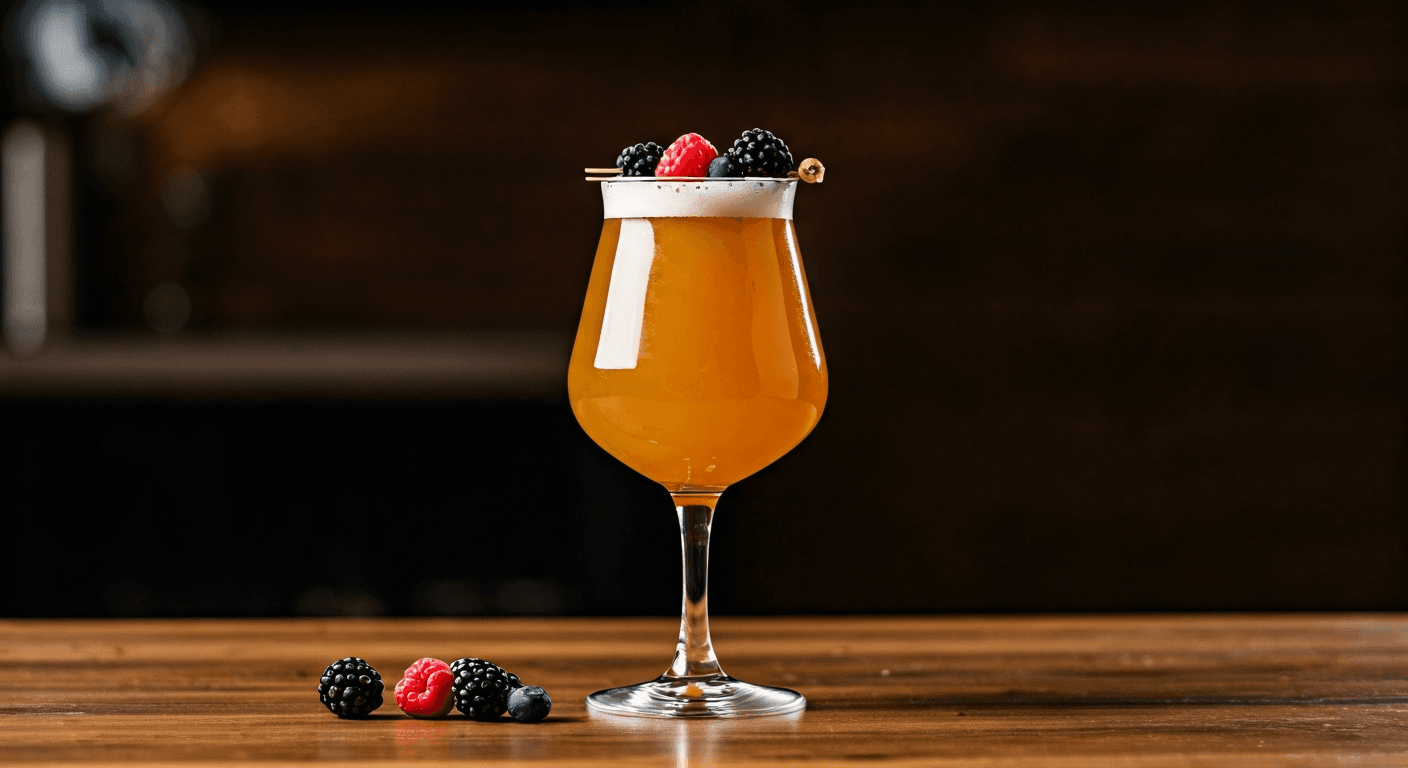
Unleash the spirit of a British summer with this advanced Hedgerow Forager's Saison. This unique brew combines classic Saison spiciness with a vibrant burst of locally sourced hedgerow berries, offering a complex, tart, and refreshingly effervescent experience.
Brewing Specifications
1.048
1.007
Equipment Needed
Large Brew Kettle (minimum 25-30L capacity)
Mash Tun with False Bottom or Grain Bag (for BIAB)
Fermentation Vessel (25L capacity, with airlock and bung)
Secondary Fermentation Vessel (optional, but recommended for fruit addition)
Hydrometer and Test Jar
Thermometer
Long Stirring Spoon/Paddle
Sanitiser (e.g., Star San, VWP)
Bottling Bucket with Spigot or Kegging System
Bottles (approx. 40 x 500ml) or Keg
Bottle Capper and Caps (if bottling)
Measuring Jug and Scales
Ice Bath or Wort Chiller
Ingredients (for 20 Litres / 5.3 Gallons)
Grains
3.5 kg (7.7 lbs) Pilsner Malt
1.0 kg (2.2 lbs) Wheat Malt
0.5 kg (1.1 lbs) Rye Malt
Hops
35g (1.2 oz) Styrian Goldings Hops (5.0% AA) - 60 min boil
20g (0.7 oz) Styrian Goldings Hops (5.0% AA) - 15 min boil
15g (0.5 oz) Styrian Goldings Hops (5.0% AA) - 5 min boil
Yeast
1 packet (11.5g) Lallemand Belle Saison Dry Yeast (or equivalent liquid Saison strain like Wyeast 3724 Saison or White Labs WLP565 Belgian Saison I)
Other
1.2 - 1.5 kg (2.6 - 3.3 lbs) Mixed Hedgerow Berries (Blackberries, Raspberries, Elderberries) - fresh or frozen
Irish Moss or Whirlfloc Tablet (1/2 tsp or 1 tablet) - 10 min boil
Yeast Nutrient (1/2 tsp) - 10 min boil
Water (Brewing water profile adjusted for crispness, e.g., low alkalinity)
Carbonation Drops or Priming Sugar (Dextrose/Corn Sugar) for bottling/kegging
Mashing Instructions
Heat Strike Water: Heat 15 litres (4 gallons) of strike water to approximately 70°C (158°F). This should bring your mash to the target temperature.
Dough In: Slowly add your crushed grains to the strike water in your mash tun, stirring gently to ensure there are no dry clumps (dough balls).
Mash Rest: Aim for a mash temperature of 65°C (149°F). Maintain this temperature for 75 minutes. This temperature promotes good fermentability, leading to a drier Saison.
Mash Out: After 75 minutes, raise the mash temperature to 76°C (169°F) and hold for 10 minutes. This stops enzymatic activity and makes the wort less viscous for sparging.
Recirculate (Vorlauf): Slowly drain about 2-3 litres of wort from the mash tun and gently pour it back over the grain bed until the wort runs clear. This sets the grain bed as a filter.
Sparge: Begin to collect the wort into your brew kettle. Slowly add hot sparge water (around 77°C / 170°F) to the mash tun, maintaining a constant level above the grain bed, until you have collected approximately 23-25 litres (6-6.5 gallons) of pre-boil wort.
Boiling & Hopping
Bring to a Boil: Once you've collected your wort, bring it to a vigorous rolling boil. Skim off any hot break material that forms on the surface.
Hop Additions:
60 minutes: Add 35g (1.2 oz) Styrian Goldings Hops for bittering.
15 minutes: Add 20g (0.7 oz) Styrian Goldings Hops for flavour.
10 minutes: Add 1/2 tsp Irish Moss or 1 Whirlfloc tablet and 1/2 tsp Yeast Nutrient.
5 minutes: Add 15g (0.5 oz) Styrian Goldings Hops for aroma.
Cooling: After a total of 60 minutes of boiling, turn off the heat. Rapidly cool the wort down to 18-20°C (64-68°F) using an immersion chiller or an ice bath.
Transfer to Fermenter: Sanitize your fermentation vessel. Carefully transfer the cooled wort, leaving behind as much hop trub and cold break material as possible.
Aeration: Vigorously aerate the wort by shaking the fermenter or using an aeration stone. This is crucial for healthy yeast.
Fermentation
Pitch Yeast: Once the wort is cool and aerated, pitch your rehydrated Belle Saison yeast. If using liquid yeast, ensure you have a healthy starter.
Primary Fermentation: Seal the fermenter with an airlock. Ferment at 18-24°C (64-75°F). Higher temperatures (up to 24°C) will encourage more of the characteristic spicy, peppery phenols from the Saison yeast. Fermentation typically lasts 7-10 days.
Prepare Berries: While primary fermentation is active, prepare your berries. If fresh, wash thoroughly. If frozen, thaw them. For maximum flavour extraction and sanitation, you can gently mash or purée them, then pasteurise them by heating to 65-70°C (149-158°F) for 15-20 minutes, or simply freeze and thaw them multiple times. Ensure everything that touches the fruit is sanitised.
Secondary Fermentation (with Fruit): After primary fermentation subsides (gravity has stabilised for a few days), carefully transfer the beer off the yeast cake into a sanitised secondary fermenter containing your prepared hedgerow berries. This minimises contact with the primary yeast cake, reducing off-flavours, and allows the fruit to ferment out.
Conditioning with Fruit: Allow the beer to condition on the fruit for an additional 7-14 days. You'll likely see renewed airlock activity as the yeast ferments the sugars from the fruit. Taste periodically (with a sanitised wine thief) until the desired fruit character is achieved.
Final Gravity: Take a final hydrometer reading. The Saison yeast, combined with fruit sugars, should result in a very low final gravity, typically around 1.006-1.010.
Bottling/Kegging
Sanitise: Thoroughly sanitise your bottling bucket, bottles/keg, caps, and any other equipment that will come into contact with the beer.
Priming (Bottling): If bottling, prepare your priming sugar solution. For 20 litres, dissolve 120-150g (4.2-5.3 oz) of dextrose (corn sugar) in 250ml (1 cup) of boiling water. Let it cool, then add it to your sanitised bottling bucket.
Transfer: Gently transfer the beer from the fermenter to the bottling bucket (or directly to a sanitised keg). If bottling, ensure the priming sugar is evenly mixed by stirring gently.
Bottle/Keg: Fill your bottles, leaving about 2-3 cm (1 inch) of headspace, and cap them. If kegging, transfer to your sanitised keg and carbonate to your desired level (Saisons are often highly carbonated, 2.8-3.5 volumes of CO2).
Conditioning: Store bottles at room temperature (18-22°C / 64-72°F) for at least 2-3 weeks for carbonation to complete. Kegged beer can be carbonated in a few days at cold temperatures.
Tips for Success
Sanitation is Paramount: Especially when working with fruit, meticulous sanitation is critical to prevent unwanted infections.
Yeast Health: Saison yeasts can be vigorous but also sometimes stall. Ensure good aeration of the wort and a healthy pitch rate. A yeast starter is highly recommended for liquid strains.
Temperature Control: While Saison yeast thrives at warmer temperatures, try to keep it consistent within your chosen range to avoid off-flavours.
Berry Selection: Use ripe, good quality berries. The mix of blackberries, raspberries, and elderberries will provide a fantastic complex fruit character. Adjust quantities to your taste - more fruit equals more intense flavour and potentially more tartness.
Patience: Saisons, especially with fruit, often benefit from extra conditioning time to allow the flavours to meld and mature.